^ Product Messaging and Narrative Strategist
Positioning, messaging systems, and investor narratives for founders whose products are ready before their story is. Clarity is the most underrated growth lever in startups. My job is to build it.
Who this is for: founders who have raised or are about to, whose product works but whose explanation does not. The longer the story stays unclear, the more rounds, hires, and customers you lose to people who simply sound clearer.
Most founders do not go looking for this until they feel the cost of not having it. Product messaging and positioning is the work of making a company clear to the people it needs to reach. When the product is ready and the story is not, founders usually try one of four things.
The cost: you stay too close to the product.
The
explanation makes sense in your head, but not to someone hearing it for the first time. AI can generate
words. It cannot tell you which idea is wrong.
The cost: better writing on unclear thinking.
When
the positioning underneath is fuzzy, stronger copy only makes the confusion sound more polished.
The cost: a brand that looks finished but still needs
explaining.
The logo, colours, and guidelines get done. The investor narrative and customer
message are usually left untouched.
The cost: execution without diagnosis.
A junior
hire can execute a plan when it is clearly defined. Finding where the story breaks takes pattern recognition
built over time.
All four produce words, but the work comes before them. I identify where the thinking breaks, define what each audience needs to understand, and build the story from there. The four moves are how I execute it.
Good instincts are hard to hire, but a system is not. These are the four moves I use on every engagement. They're designed to keep working after I leave.
What would the customer do tomorrow if the product
vanished?
It finds your true competitor. Position against what people actually do instead, and you
claim a pain nobody else is naming.
Separate the one pain with no workaround from the eventual
big vision.
Lead with the wedge to win now. Fund the category to grow into. Most decks die because
they pitch the category before they have earned it with the wedge.
Lead with what a buyer feels before they read a single
spec.
Then put the proof one layer down for the buyer who keeps reading. Feeling gets them in the
door. Evidence keeps them. Lead with evidence, and you only reach the people already paying attention.
Order the ideas so each one earns the
next.
Authority compounds when ideas arrive in sequence and resets to zero when they do not. It is
why publishing more rarely builds authority, and publishing in order does.
01 Case file · Named client · Lagos, Nigeria
Pika's founder, Tony, had built a three-sided logistics and commerce platform connecting vendors, dispatch riders, and customers across Lagos. He had reached Antler's final stage, gone through YC's pitch process, and presented at Africa Startup Festival. Everyone gave him the same note: strong technical grasp, weak business case. People understood what Pika built. They could not tell you why it mattered to them.
The team was entirely technical, which meant Pika's internal language and its audience's language were two different dialects. Copy alone could not fix that. Fixing it meant working out what Pika actually was to a vendor, a rider, and an investor, since each needed a different answer to the same question.
I also had to choose the right founding story. Tony's instinct was a dramatic spike: two hundred messages in a single day after a product went viral. Memorable, but it describes an exception. The story that holds up daily is ordinary: a vendor confirming payments by hand, calling riders who do not answer, closing a day of sales she cannot fully account for. Ordinary problems convert better than dramatic ones, because more people recognise themselves inside them.
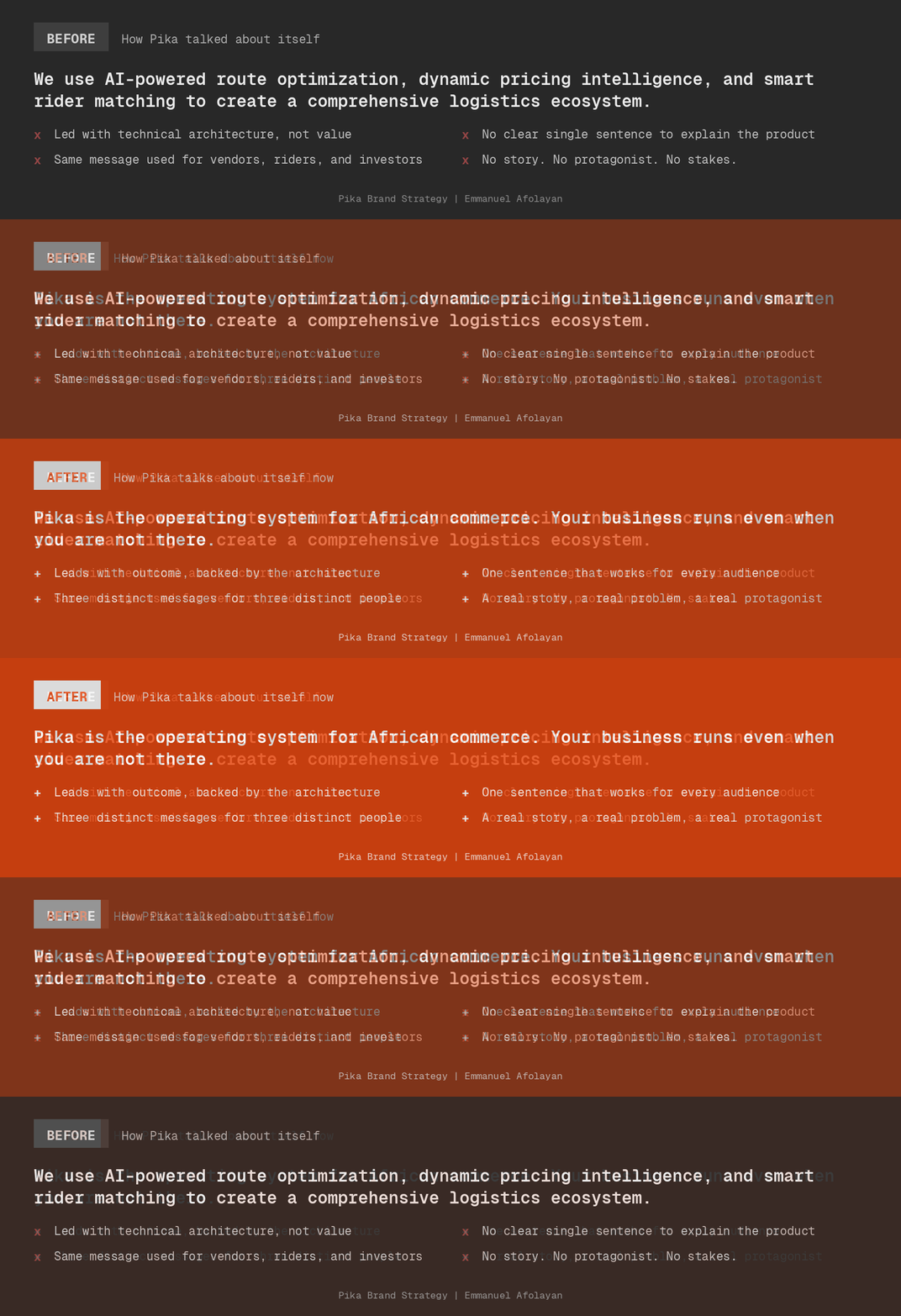
Fig·01 Before and after repositioning — the Pika messaging system
One core sentence anchored everything. Pika is the operating system for African commerce, a platform that runs your business even when you are not there. Every product detail became proof for that sentence instead of a competing claim.
From there, three separate messaging tracks. Vendors heard about time and trust. Riders heard about fair pay and route efficiency. Investors heard about market structure and the gap left open by the incumbents. A brand voice guide and a field sales script gave the whole team one consistent way to repeat all of it correctly.
Vendor signups grew 300% in the two months after launch, from 200 to 800. Past the number, Pika went from one founder explaining the product inconsistently across rooms, to a documented system any team member can use correctly, for the right audience, in language that the audience already understands.
A startup does not have a messaging problem until it tries to be one thing to everyone. Better words rarely solve that. Deciding, on paper, who the product is for and what each of them needs to hear is what solves it.
02 Case file · Under NDA · Africa
The client builds core banking infrastructure. It sits under a fintech group that has processed over $7.5 billion, and it lets other fintechs launch global money products without building the plumbing themselves. The product is technical, and the buying decision is expensive, so the words around it matter as much as the code.
Three audiences needed to hear one story at once: engineers evaluating the platform, investors assessing the company, and new users encountering the brand for the first time.
Each needed a different entry point into the same product, but the site offered only one. Engineers left unconvinced, investors uncertain about scale, and newcomers unclear on what it did. One page, three audiences, none served.
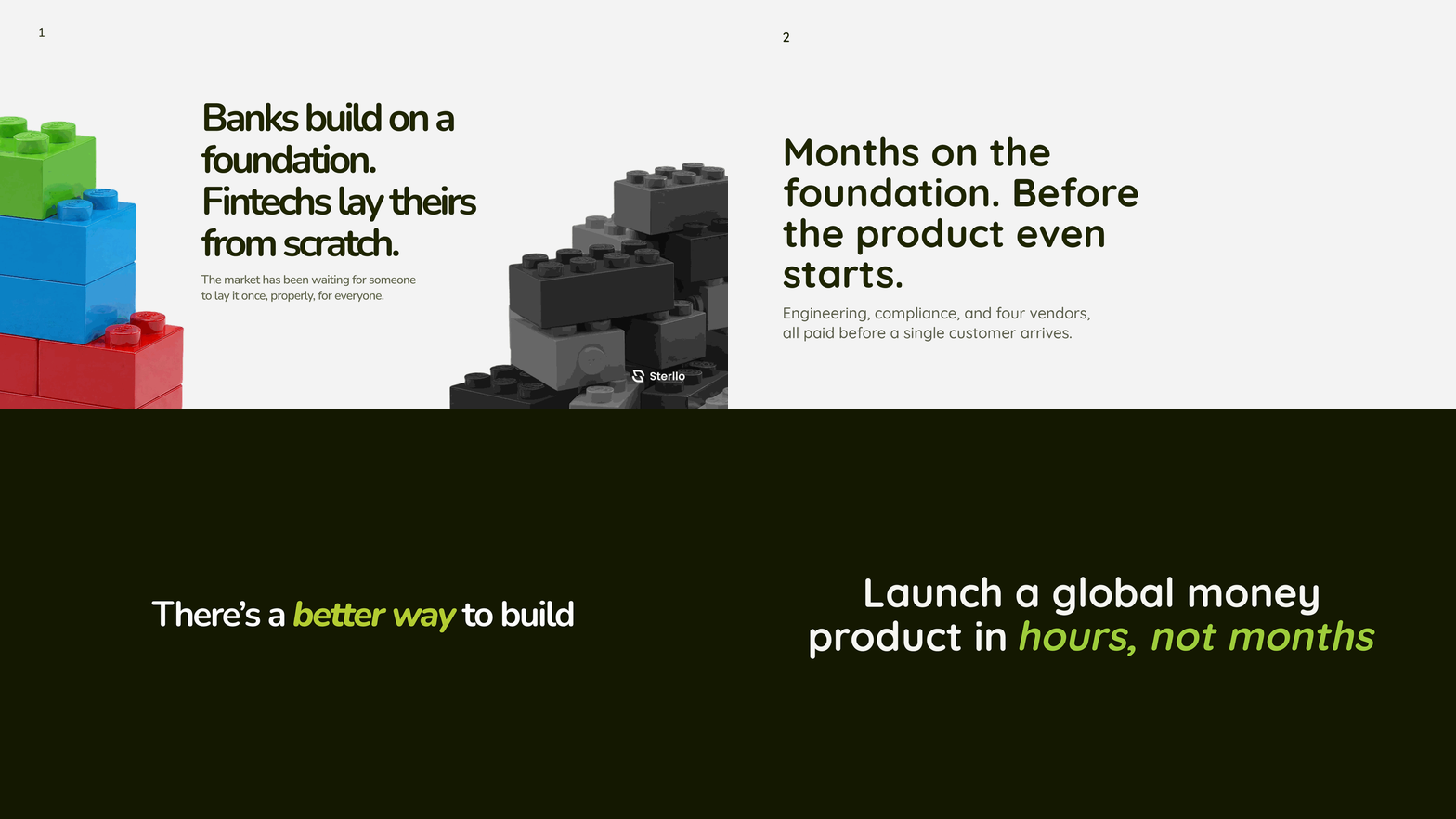
Fig·02 Sterllo — the fintech infrastructure platform
Technical products often lead with depth, but that only serves people already engaged. I started with speed and consolidation, which founders care about first. The brochure opens on the pain of stitching together multiple vendors, not the system design.
From there, I added proof, uptime, coverage, and $7.5B in transaction volume. That supports engineers and investors once they continue reading. Interest first, evidence next.
Everything followed the same structure: benefits before features, numbers before explanation, and no competitor mentions. I built five core assets on this approach and defined copy rules for the design team to keep it consistent after handoff.
The company now meets all three audiences with one story instead of three half-stories. The newcomer understands what it is in a sentence. The engineer finds the proof a layer down. The investor finds the scale behind it, the $7.5 billion no longer buried in a footnote but doing the work it should.
The brand walked into its next chapter with a message that holds together, and a set of rules that keep it holding together without me in the room.
A technical product does not lose deals because it is weak. It loses them because the first person who reads about it cannot tell what it does before they give up. The work made the product legible to the three people who decide its future, in the order they each needed to hear it. The clarity is the asset now, and it keeps paying out on every page the company publishes.
^ More selected work

This is my blog. I tear down the messaging behind brands everyone admires, and write about how companies explain themselves, or fail to.
TDMS runs as a newsletter too. Subscribe via email
"Having Emmanuel in your corner is a massive unfair advantage for any early-stage team."
"Emmanuel has an exceptional analytical mind for early-stage storytelling and product positioning. He is incredibly candid, giving you the raw, honest feedback you need to hear, while rolling up his sleeves to help you execute."
Fola Oluwafemi · Co-founder, Harpenin · Client, 2026
"The most talented writer I have ever worked with."
"Comprehension on topics of business, technology and branding is superb. Will consider him a collaborator for our business many years to come."
Jakob Wredstrøm · Founder, venture studio · Managed Emmanuel directly, 2025
"A writer who embeds himself into the story behind the content."
"He takes it upon himself to research topics thoroughly and always goes above and beyond when delivering."
Grant Collins · Marketing Strategist · DMCG Global, 2024
"Delivering our stories in an interesting and compelling style."
"His work ethic is excellent. He turns around work quickly for us, communicates effectively and nothing is too much trouble for him."
James A. Matthewson · Founder and CEO, ArtTech brand · Client, 2025
^ Emmanuel Afolayan
I've spent most of my career writing under other people's names. I have my fingerprints everywhere, but my signature is nowhere.
Outside of that, I play football like it's a scheduled obligation. I also watch athletics and boxing, the way other people check the weather. I enjoy poetry and spoken word.
My newsletter is called Nude Notes. Don't ask me why I named it that.
At the centre of it all is a simple pattern: I pay attention to things. I look for where meaning breaks, where people stop understanding each other, and where clarity should have existed but didn't.
^ How I work
Find where the story breaks and why, usually upstream of the copy.
Decide the one thing each audience must understand, and in what order.
Write the system: messaging, narrative, assets, and the rules that hold after handoff.
One story, told differently to every room.
^ Currently
Reading: Talent is never enough
Working on: Harpenin VSL
Open to: Product marketing and messaging roles · Strategic engagements
Some of this is companies I am helping build. Some of it I am learning because I could not leave it alone. I keep it here because a person is more than a job description, and because the way someone spends time off the clock usually tells you how they think on it.
Most engagements begin with a Positioning Teardown. I take your current site, deck, or pitch, run it through the four moves above, and show you exactly where the story breaks and what it is costing you. You leave with a diagnosis you can act on, whether or not we keep working together.
If we do keep going, that diagnosis becomes the brief for the rebuild: the positioning, the messaging system, and the assets that carry it, whether that is an investor narrative, a website, a brochure, or the founder voice behind all of them.
^ Step one · Positioning Teardown
A diagnosis of where the story breaks and what it costs.
^ Step two · The rebuild
Positioning, messaging system, and the assets that carry it.
The fastest way to reach me is email. Tell me what you are building and where the story is stuck. I read everything.
afolayanemmanueloluwakayode@gmail.comAlso on LinkedIn
^ Case file